Dental devices for Obstructive Sleep Apnea Treatment

Obstructive Sleep Apnea (OSA) is a sleep disorder which occurs when there is an interruption to breath while sleeping.
This typically occurs when the muscles supporting the soft tissues of the throat relax excessively, allowing the airway to collapse temporarily.
If it occurs often, you cannot get a peaceful sleep and will cause various life-threatening conditions.
Continuous Positive Airway Pressure (CPAP) therapy is a widely prescribed treatment and remains the gold standard for moderate to severe cases.
However, for patients with mild to moderate obstructive sleep apnea, or those unable to tolerate CPAP, oral appliance therapy offers an effective alternative. They look like mouth guards and orthodontic appliances.
Dental devices used in treating OSA
Dental sleep appliances are custom-made devices that resemble orthodontic retainers or mouth guards. Worn during sleep, they work by gently repositioning the lower jaw and tongue to keep the airway open, reducing airway collapse and improving airflow.
Dentists trained in sleep medicine provide these appliances after a detailed evaluation. When appropriately prescribed and fitted, oral appliances can significantly reduce snoring, improve sleep quality, and enhance overall daytime functioning.
Dental professionals typically offer three main types of oral sleep appliances, selected based on airway anatomy, severity of symptoms, and patient comfort.
Mandibular Advancement Device
Also called Positive Airway Pressure (PAP) therapy, this custom-made dental device fits inside the mouth and gently moves the lower jaw forward.
By repositioning the jaw, it reduces throat blockage and improves airflow to the lungs. The device is made from molded hard plastic with metal hinges and includes a Thornton Adjustable Positioner (TAP), allowing precise adjustment of jaw movement for better comfort and effectiveness.
Tongue Retaining Device / Tongue Stabilizing device
This device is ideal for patients whose jaw structure cannot be repositioned. Made of soft plastic, it holds the tongue in a forward position using gentle suction. By preventing the tongue from falling back, it keeps the airway open and reduces breathing interruptions during sleep, helping improve sleep quality.
CPAP + Oral Appliance therapy
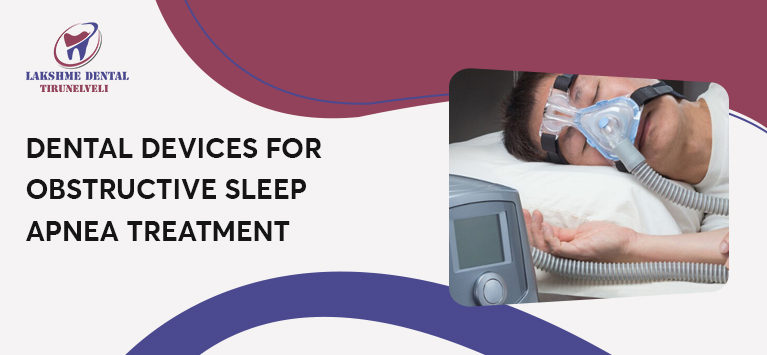
CPAP (Continuous Positive Airway Pressure) is a common sleep apnea treatment that uses a bedside machine to deliver constant airflow, keeping the airway open. It consists of a motor, a mask worn over the nose, and a connecting tube.
In some cases, dentists combine CPAP with an oral appliance. This dual approach enhances comfort, improves compliance, and delivers more effective results for certain patients.
Are there any risks involved in wearing them?
Oral appliance therapy for sleep apnea is generally safe and does not cause serious side effects. It may be associated with minor, temporary discomforts such as:
- Dry mouth
- Bite changes
- Loose teeth
- Excessive drooling
- TMJ pain
These effects are common and usually manageable, so there is no need for concern.
In comparison, CPAP therapy can pose certain risks for individuals with existing medical conditions. For this reason, dentists often recommend oral sleep apnea devices for patients with organ-related issues, respiratory problems, or other health concerns where CPAP may not be suitable.
Benefits of using dental appliances for sleep apnea
- They are portable and do not need any sources like electricity to activate. So you can carry them wherever you go.
- The dental devices are well-tolerated thereby they do not intervene in your day-to-day activities.
- Non-invasive solutions
- Maintenance is easy
Bottom Line
Oral appliance therapy is an efficient treatment to overcome mild to moderate obstructive sleep apnea.
Similar to CPAP and Uvulopalatopharyngoplasty (UPPP), mouth devices are also efficient in reducing daytime sleepiness, improving concentration, and eliminating other side effects of OSA like snoring.
At times when dentists or sleep specialists discover sleep apnea cannot be treated with CPAP or dental sleep devices, they go for UPPP surgery.
However, a doctor prefers the right sleep apnea treatment with various factors like existing medical problems, upper airway’s physical structure, and importantly the severity of your problem.