When to Start Brushing Infant Teeth?

Oral care begins much earlier than many parents expect. One of the most common questions in pediatric dental care is “when to start brushing infant teeth?”
The timing and method of early brushing plays an important role in preventing early childhood cavities and establishing healthy oral habits.
This guide explains when to start brushing, how to do it safely, and why early oral hygiene matters, based on pediatric dental recommendations.
When do you start brushing an infant’s teeth?
Infant teeth should be brushed as soon as the first tooth appears.
For most infants, the first tooth appears between 6 and 10 months of age, though timing can vary. Once a tooth is visible in the mouth, it is exposed to bacteria and sugars, making brushing necessary.
Why is it important to brush infant teeth early?
Although baby teeth are temporary, they play a critical role in:
- Proper chewing and nutrition
- Speech development
- Holding space for permanent teeth
- Preventing early childhood tooth decay
Cavities in baby teeth can cause pain, infection, and may affect the development of permanent teeth. Early brushing helps reduce bacterial buildup and establishes a routine that supports long-term oral health.
What to do before the first tooth appears?
Even before teeth erupt, oral care is recommended.
Parents can gently clean the infant’s gums by:
- Using a clean, soft, damp cloth
- Wiping the gums once or twice daily, especially after feeding
This helps remove milk residue and introduces the child to oral cleaning as part of daily care.
How to brush infant teeth safely?
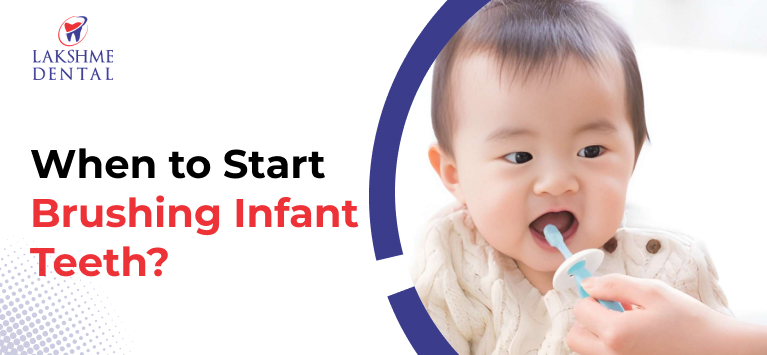
Once the first tooth appears, brushing should be done carefully and gently.
Toothbrush
- Use a small-headed, soft-bristled infant toothbrush
- The handle should allow good grip for the caregiver
Toothpaste
- Use a smear layer (grain-of-rice size) of fluoride toothpaste if your child is above 18 months old. For children below that, brush gently with water.
- This amount is safe if swallowed and effective in preventing decay.
Technique
- Brush gently in small circular motions
- Clean all visible tooth surfaces
- Focus on the gumline, where plaque tends to collect
Brushing should be done twice daily, ideally in the morning and before bedtime.
When can infants brush their own teeth?
Infants and toddlers do not have the motor skills needed to brush effectively on their own.
Parents should:
- Brush the child’s teeth until at least 6 –7 years of age
- Supervise brushing even after children begin holding the toothbrush
This ensures proper cleaning and prevents excessive toothpaste swallowing.
Is fluoride safe for infants?
Yes. When used in the correct amount, fluoride toothpaste is safe and recommended for infants once the first tooth erupts.
Fluoride strengthens tooth enamel and helps significantly lower the risk of cavities. Using only a smear amount minimizes the risk of excess fluoride ingestion.
Common mistakes parents should avoid
Some common early oral care mistakes include:
- Waiting too long to start brushing
- Avoiding fluoride toothpaste unnecessarily
- Allowing infants to sleep with milk or juice in the mouth
- Skipping nighttime brushing
These practices increase the risk of early childhood tooth decay.
What if my infant resists brushing?
Resistance is common and usually temporary. Helpful strategies include:
- Making brushing part of a calm routine
- Singing or talking during brushing
- Keeping brushing sessions short and gentle
Consistency is more important than perfection at this stage.
When should an infant see a dentist?
A child’s first dental visit is recommended by the first birthday or within six months of the first tooth erupting, whichever comes first.
Early visits focus on:
- Monitoring tooth development
- Identifying early signs of decay and need any fluoride varsnishes incase the child has a higher risk of developing cavities
- Guiding parents on oral hygiene and feeding habits
Conclusion
Brushing infant teeth should begin with the eruption of the first tooth and continue as a parent-led routine throughout early childhood. Early oral hygiene helps prevent cavities, supports healthy development, and builds habits that protect long-term dental health.
Starting early, using the right tools, and maintaining consistency are the foundations of effective infant oral care.
Frequently Asked Questions
As soon as the first tooth appears.
Twice a day, morning and before bedtime.
Yes, a smear amount of fluoride toothpaste is recommended.
Yes, prolonged exposure, especially during sleep can contribute to tooth decay.
Yes. Gentle persistence and routine usually improve cooperation over time.
Fluoride toothpaste can be used as soon as the first tooth appears, in a smear amount about the size of a grain of rice.
Cleaning the gums and tongue can begin even before the first tooth erupts, using a clean, soft, damp cloth.
Baby teeth should be brushed after the last milk feed of the day, especially before bedtime, to reduce the risk of tooth decay.
Start brushing as soon as your baby’s first tooth appears.
Brush twice a day, once in the morning and once before bedtime.
Yes, when fluoride toothpaste is used in a smear amount appropriate for infants.