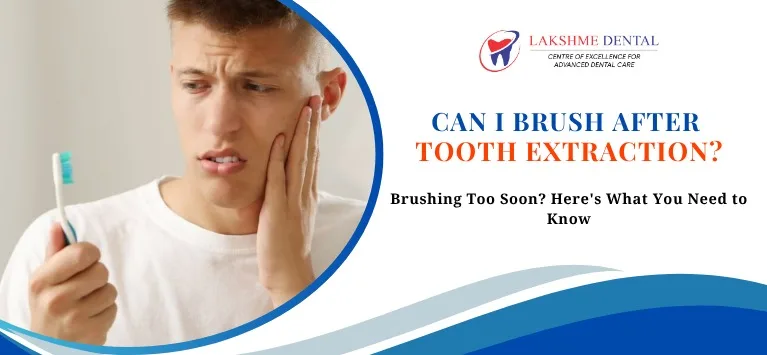
Can I Brush My Teeth After a Tooth Extraction?

If you have recently had a tooth removed, you’re probably wondering how to keep your mouth clean without interfering with the healing process. One of the most common questions patients ask is, Can I brush my teeth after a tooth extraction?
The good news is that maintaining oral hygiene remains important during the healing process. However, the extraction site requires special care to allow proper healing and prevent complications.
If you’ve recently had a tooth extraction, here’s everything you need to know about brushing your teeth safely while protecting the healing area.
Why Oral Hygiene Matters After a Tooth Extraction
When a tooth is removed, your body immediately begins the healing process by forming a protective blood clot inside the empty socket.
This clot acts as a natural protective layer that
- Covers the exposed bone and nerves
- Helps stop bleeding
- Supports tissue regeneration
- Protects the area from infection
While keeping your mouth clean is essential, disturbing this clot too early can slow recovery and increase the risk of painful complications such as dry socket.
This is why dentists recommend a careful balance between maintaining oral hygiene and protecting the extraction area.
Can You Brush Your Teeth on the Day of the Extraction?
Yes, you can brush your teeth on the day of the extraction, but avoid the extraction site completely.
For the first 24 hours:
- Use a soft-bristled toothbrush.
- Brush slowly and gently.
- Avoid touching the extraction socket.
- Do not rinse vigorously.
- Avoid forceful spitting after brushing.
The first day is crucial because the blood clot is still forming. Any unnecessary pressure inside the mouth can interfere with this natural healing process.
When Can You Start Rinsing Your Mouth?
Many patients feel the urge to rinse their mouth immediately after an extraction, but this should be avoided during the first 24 hours.
After the first day, you can gently rinse with warm salt water to help keep the area clean.
A simple saltwater rinse can be prepared by mixing:
- Half a teaspoon of salt
- One glass of lukewarm water
Instead of swishing aggressively, allow the solution to move gently around your mouth before letting it flow out naturally.
This can help remove food particles and support healing without disturbing the extraction site.
What Can You Eat After a Tooth Extraction?
For the first few days, choose foods that are soft and easy to chew. Yogurt, porridge, soups, and other gentle foods can help you stay comfortable while the extraction site heals.
It’s best to avoid hard, crunchy, spicy, or sticky foods until your dentist confirms that the area is healing properly.
What Should You Avoid During Recovery?
While the extraction site heals, certain habits and foods can increase the risk of complications.
Smoking
Smoking can delay healing by reducing blood flow to the gums and increasing the likelihood of developing dry socket.
Using a Straw
The suction created when drinking through a straw can dislodge the protective blood clot and interfere with healing.
Hard or Crunchy Foods
Foods such as chips, popcorn, nuts, and crackers can irritate the extraction site and become trapped in the socket.
Hot Foods and Beverages
Very hot drinks and foods may increase discomfort and irritate the healing tissues.
Alcohol
Alcohol can interfere with healing and may interact with medications prescribed after the procedure.
Signs You Should Contact Your Dentist
Mild swelling and discomfort are normal after a tooth extraction. However, certain symptoms should never be ignored.
Contact your dentist if you notice:
- Severe pain that worsens after a few days
- Persistent bleeding
- Fever
- Facial swelling that continues to increase
- Bad taste or foul odor from the extraction site
- Difficulty opening your mouth
- Pus or unusual discharge
Early treatment can prevent more serious complications and improve recovery outcomes.
How Long Does It Take for the Extraction Site to Heal?
Every patient heals differently, but in general:
| Healing Stage | Timeline |
| Blood clot formation | 24 Hours |
| Initial gum healing | 1–2 weeks |
| Significant tissue healing | 3–4 weeks |
| Complete bone healing | Several months |
Following your dentist’s aftercare instructions can help ensure a smooth recovery.
Final Thoughts
Brushing your teeth after a tooth extraction is not only safe but also important for maintaining oral health during recovery. The key is to be gentle, avoid disturbing the extraction site, and follow your dentist’s aftercare instructions closely.
With proper care and attention, most extraction sites heal without complications, allowing you to return to your normal oral hygiene routine in a relatively short time.
Frequently Asked Questions
Yes. You can brush the teeth away from the extraction site using a soft-bristled toothbrush. Avoid direct contact with the extraction area.
Toothpaste is generally safe to use. The main concern is avoiding aggressive brushing or forceful spitting after brushing.
Most patients can gradually resume brushing near the area after a few days, depending on healing. Follow your dentist's recommendations.
If the clot is dislodged, the underlying bone and nerves may become exposed, increasing the risk of dry socket and significant discomfort.
Maintain good oral hygiene, stay hydrated, eat soft nutritious foods, avoid smoking, and follow all post-operative instructions provided by your dentist.