Why does the skin inside of your mouth peel?

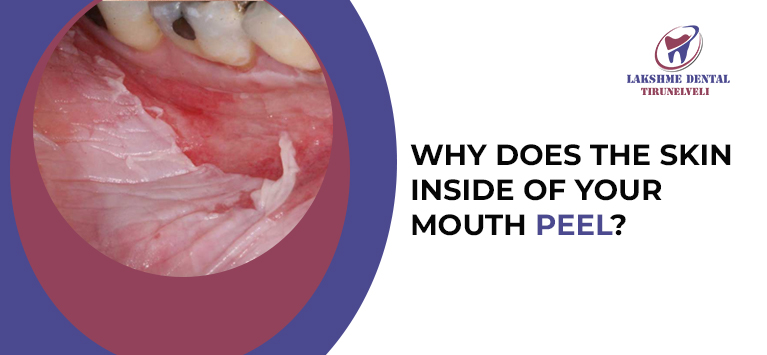
Skin peeling inside the mouth, on the inner cheeks, lips, gums, or roof of the mouth are a common oral concern. In most cases, it is temporary and harmless, but recurring or severe peeling may indicate an underlying oral, nutritional, or systemic issue that requires attention.
This guide explains why mouth skin peeling happens, when it’s normal, what causes it, and how to stop it effectively.
What is skin peeling inside the mouth?
Skin peeling inside the mouth refers to shedding or sloughing of the oral mucosa, the soft tissue lining the cheeks, lips, palate, gums, and tongue.

This may appear as:
- White or translucent skin peeling
- Loose tissue inside the cheek
- Flaky skin on lips or gums
- Peeling on the roof of the mouth
- Peeling of skin around the teeth
- Sensitivity or mild burning sensation
Why is mouth skin peeling a concern?
The inner lining of your mouth is protected by a tissue layer called the oral mucosa.
Functions of the Oral Mucosa
- Acts as a protective barrier against irritation and infections
- Prevents bacteria and food particles from entering deeper tissues
- Plays a role in oral immunity
When this barrier is compromised:
- The mouth becomes more vulnerable to infections
- Healing slows down
- In rare cases, microbes may penetrate deeper tissues
Persistent oral skin peeling should never be ignored.
Is skin peeling inside the mouth normal?
Yes — in many cases.
Mild mouth skin peeling often resolves on its own within a few days and is commonly caused by:
- Cheek biting
- Hot foods or beverages
- Acidic foods and drinks
- Temporary irritation from toothpaste or mouthwash
However, if peeling is frequent, painful, widespread, or long-lasting, it may signal an underlying condition such as nutritional deficiency, allergy, or oral disease.
What causes skin peeling inside the mouth?
1. Sodium Lauryl Sulfate (SLS) in Toothpaste
SLS is a foaming agent commonly used in toothpaste.
Why it causes peeling:
- Can irritate sensitive oral tissues
- Triggers oral mucosal sloughing in some individuals
- Often linked to mouth sores and inner cheek peeling
Switching to SLS-free toothpaste often resolves the issue.
To know which toothpaste might be good for your oral health, give this a read: Which toothpaste is right for you?
2. Autoimmune Diseases
Autoimmune conditions cause the immune system to attack healthy tissues.
Common symptoms include:
- Oral tissue sloughing
- Inflamed gums
- Chronic fatigue
- Recurrent mouth lesions
Examples include:
- Celiac disease
- Addison’s disease
Oral skin peeling may be an early warning sign.
3. Stevens–Johnson Syndrome (SJS)
Stevens–Johnson Syndrome is a rare but serious condition affecting the skin and mucous membranes.
Key signs:
- Flu-like symptoms
- Painful blisters
- Severe skin and oral mucosa peeling
- Crusting around lips and inside the mouth
This is a medical emergency and requires immediate care.
4. Nutritional Deficiencies (Malnutrition)
Poor nutrition directly impacts oral tissue health.
Deficiencies commonly linked to mouth skin peeling:
- Vitamin A
- Vitamin C
- Vitamin B3, B6, B12
- Iron
- Zinc
When nutrients are lacking:
- Peeling, soreness, and ulcers may appear
- Tissue repair slows down
- Oral mucosa becomes fragile
5. Food Allergies and Acidic Foods
Certain foods can irritate the oral lining.
Common triggers:
- Citrus fruits
- Spicy foods
- Highly acidic foods
- Food allergies
Symptoms may include:
- Redness
- Rashes
- Inner lip or cheek skin peeling
Avoiding trigger foods often leads to quick improvement.
How to stop skin peeling inside mouth?
The key is identifying and eliminating the cause. These practical steps help reduce oral skin peeling:
- Drink plenty of water to prevent dryness
- Avoid spicy, acidic, and salty foods
- Use mild, SLS-free toothpaste
- Brush gently with a soft-bristled toothbrush
- Maintain a balanced diet rich in vitamins and minerals
- Avoid cheek biting or oral habits
If symptoms persist, consult a dentist for targeted treatment.
When should you see a dentist?
Seek professional help if:
- Peeling lasts more than 7–10 days
- There is pain, bleeding, or burning
- Symptoms keep recurring
- You notice skin peeling on gums, palate, or throat
A dentist can identify whether the cause is product-related, nutritional, allergic, or medical.
Bottom Line
Skin peeling inside the mouth can range from minor irritation to a sign of an underlying condition. While many cases resolve on their own, chronic oral mucosa peeling requires professional evaluation.
Once the trigger is identified such as SLS toothpaste, nutritional deficiency, or allergy, simple lifestyle and oral care adjustments can prevent recurrence.
Our experienced dentists at Lakshme Dental Hospital have treated oral skin peeling across lips, cheeks, gums, palate, and throat.
If you’re dealing with persistent mouth skin peeling, consult our specialists for accurate diagnosis and personalized care.
Get in touch with us to discover more about this dental issue and how to avoid it.
Frequently Asked Questions
It is usually caused by irritation, toothpaste ingredients like SLS, acidic foods, nutritional deficiencies, or oral conditions.
Most cases are harmless, but persistent peeling may indicate infection, deficiency, or autoimmune disease.
Mild cases heal within a few days. Chronic cases require dental evaluation.
Yes. Toothpaste containing Sodium Lauryl Sulfate (SLS) is a common trigger.
Deficiencies in vitamins A, C, B12, iron, and zinc are commonly linked.