Are Nighttime Aligners Effective As Daytime Aligners & Dental Braces?

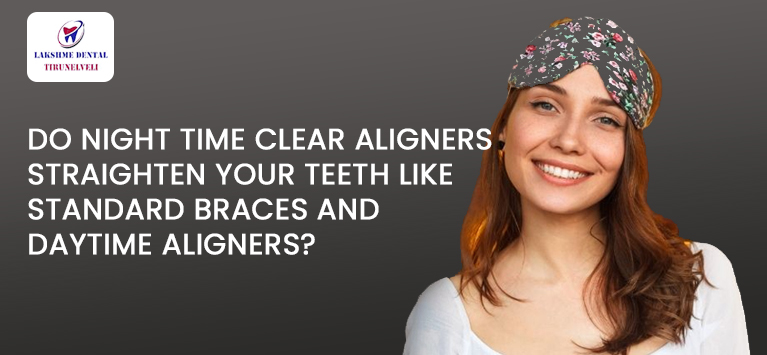
Do nighttime clear aligners straighten your teeth like standard braces or daytime aligners? The answer is no.
Nighttime clear aligners are convenient and invisible, but they cannot deliver the same tooth-movement efficiency as daytime aligners or traditional braces. They work only for minor cosmetic corrections, not for full orthodontic correction.
What are nighttime clear aligners?
As the name suggests, nighttime clear aligners are removable orthodontic trays designed to be worn exclusively during sleep, usually 8–10 hours per day.
Well-known manufacturers such as AlignerCo, Byte, and NewSmile have introduced night-only versions alongside their standard all-day aligners.
Why people prefer nighttime aligners?
Most people who visit our clinic to get orthodontic treatments request nighttime clear aligners for teeth straightening. Here are the reasons why some prefer nightime aligners as a teeth straightening tool.
- Highly discreet (worn mostly while sleeping)
- No daytime removal for meals
- Lower cost than traditional braces
- FDA-approved materials
- Designed using thicker plastic for stability and comfort
These benefits make nighttime aligners appealing, especially for patients who dislike the looks of braces or find daytime wear inconvenient.
Do nighttime aligners work as well as daytime aligners or braces?
No. Nighttime aligners can only correct very mild alignment issues.
To understand why, you need to know how orthodontic tooth movement works.
How standard braces & daytime aligners move teeth?
Orthodontic treatments works by applying continuous, gentle pressure to the teeth. This pressure affects the periodontal ligaments (PDL), the soft tissue between your tooth root and the surrounding bone.
Biological requirements for tooth movement
- The PDL space (~0.25 mm) must be compressed consistently
- The applied force must be light and continuous
- Teeth require 20–22 hours of wear per day (for removable aligners)
- The bone remodels around the tooth root only when pressure stays constant
This continuous force is possible with:
- Daytime clear aligners (20+ hours of daily wear)
- Fixed braces (non-stop pressure)
Why nighttime aligners fall short?
Nighttime aligners offer only 8–10 hours of daily wear, which:
- Compresses the periodontal ligaments for too short a duration
- Does not maintain sufficient pressure for bone remodeling
- Limits tooth movement to approximately 0.25–0.5 mm
- Fails to correct moderate or complex orthodontic cases
Nighttime aligners can treat:
- Very mild spacing
- Slight cosmetic rotation
- Tiny alignment adjustments
Nighttime aligners cannot treat:
- Overbites & underbites
- Crossbites
- Crowded teeth
- Significant rotations
- Deep spacing or overlapping
- Any case requiring structured bone movement
This is why orthodontists do not recommend night-only aligners for full orthodontic correction.
Why orthodontists still prefer daytime options?
Tooth movement is a 24/7 biological process. Even after braces are removed, retainers are required to hold the teeth in place because the ligaments and bone remain active.
Nighttime aligners simply don’t generate enough consistent force to reshape bone or maintain predictable movement patterns.
Bottom Line
Nighttime clear aligners are ideal only for minor cosmetic changes and for people who cannot commit to 20+ hours of daytime aligner wear.
If you want:
- stable results
- complete alignment
- bite correction
- predictable tooth movement
…daytime aligners or traditional braces remain the gold standard.
Always consult a licensed orthodontist before choosing any appliance, the right treatment plan depends on the biology of your teeth, not marketing claims or convenience..
Frequently Asked Questions
No. They provide limited force and work only for very minor alignment issues.
No. They do not deliver enough pressure or hours of wear to correct bites.
Effective tooth movement requires 20–22 hours/day for removable aligners.
Patients with extremely mild spacing or cosmetic alignment concerns.