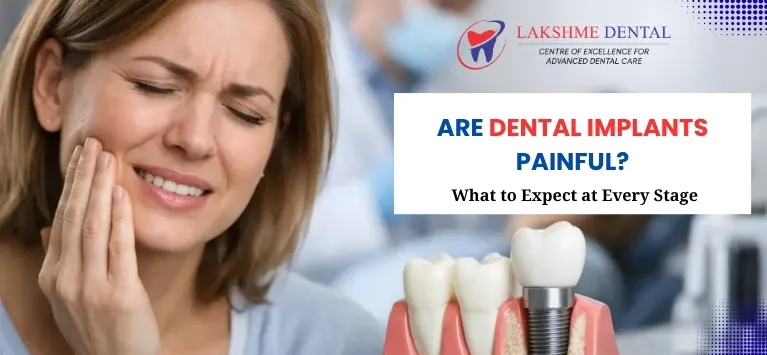
Are Dental Implants Painful? What to Expect at Every Stage

Missing teeth can affect how you chew, speak and feel about your smile. Dental implants are one option for replacing missing teeth, but the thought of undergoing a dental procedure can make some people nervous.
If you are planning to replace a missing tooth with an implant, you may be wondering how uncomfortable the treatment could be. The good news is that local anaesthesia helps control pain during the procedure. Some soreness and swelling may occur afterwards, but these symptoms usually improve as healing progresses.
What Happens During Dental Implant Treatment?
Getting a dental implant may sound intimidating, but the procedure is usually carried out under local anaesthesia to keep you comfortable. Your dentist will first check your oral health and make sure your jawbone can support the implant.
You may feel some pressure during the procedure, but sharp pain should be controlled with anaesthesia. After placement, the implant needs time to bond with the jawbone before the replacement tooth is fitted.
Learn more about our dental implant treatment.
What Happens After Dental Implant Surgery?
Once the anaesthesia wears off, you may experience tenderness around the implant site. Mild swelling, bruising or discomfort while chewing can also occur during the first few days.
These symptoms are a normal part of recovery for many patients. Your dentist may recommend medication to manage discomfort and explain how to care for the treated area.
The level of soreness varies from person to person. Following your dentist’s aftercare instructions can help you protect the surgical site while it heals.
How Long Does Dental Implant Pain Last?
Discomfort is often more noticeable during the first two or three days after implant placement. It should gradually decrease as healing continues, although mild tenderness may remain for a week or two.
The time needed to recover depends on the complexity of the procedure and your individual healing response. Remember that the implant also needs time to integrate with the jawbone, even after the initial soreness has settled.
If your pain becomes worse rather than improving, contact your dentist for advice.
What Factors Can Affect Healing After Implant Surgery?
Recovery can vary depending on your oral health and the type of treatment you receive. Some factors that may influence healing include:
- The number of implants: Having more than one implant fitted during the same appointment may result in greater initial soreness.
- Additional procedures: Bone grafting or other surgical steps may affect your recovery period.
- Gum health: Existing gum inflammation may need to be addressed as part of your treatment.
- The complexity of surgery: More involved procedures may require additional healing time.
Your dentist can explain what to expect based on your dental condition and treatment plan.
How Can You Make Recovery More Comfortable?
Simple changes to your routine after surgery may help you feel more comfortable during the first few days.
- Choose soft foods: Eat foods that require less chewing while the area is tender.
- Maintain oral hygiene: Clean your teeth carefully and follow your dentist’s instructions for caring for the implant site.
- Take medication as directed: Speak to your dentist before making any changes to your prescribed medication.
- Avoid disturbing the area: Do not repeatedly touch or press the surgical site.
- Attend follow-up appointments: Your dentist can monitor healing and advise you on the next stage of treatment.
Avoid smoking during recovery, as it can interfere with healing. Follow the specific instructions provided by your dentist.
When Should You Contact Your Dentist?
Mild tenderness and swelling may occur after implant surgery, but worsening symptoms should not be ignored. Contact your dentist if you experience severe or increasing pain, persistent heavy bleeding, fever, pus or swelling that continues to worsen.
Prompt assessment can help identify complications and ensure that you receive appropriate care.
Are Dental Implants Worth Considering?
Dental implants may help people with missing teeth chew more comfortably and improve the appearance of their smile. They can provide support for replacement teeth and may be a suitable long-term option for some patients.
However, implants are not the right choice for everyone. Your oral health, jawbone condition and individual needs will help determine whether this treatment is appropriate.
Knowing what to expect during treatment and recovery can help you decide whether implants are right for you. A consultation with your dentist can help you understand the procedure, expected healing time and alternatives available.
At Lakshme Dental, Tirunelveli, you can discuss your concerns and explore suitable options for replacing missing teeth.
Frequently Asked Questions
Dental implant surgery is usually performed under local anaesthesia, so you should not feel sharp pain during the procedure. You may notice some pressure or vibration.
Mild pain, swelling or tenderness is common during the first few days. These symptoms should gradually improve as the area heals.
The discomfort varies from person to person and depends on the complexity of the treatment. Some people experience similar or less discomfort than they expected.
Follow your dentist’s aftercare instructions, eat soft foods, maintain gentle oral hygiene and take prescribed medication as directed.
Contact your dentist if pain becomes severe or worsens instead of improving, or if you experience fever, pus or heavy bleeding.
Having multiple implants placed may lead to more discomfort, depending on the procedure and your individual healing. Your dentist can explain what to expect based on your treatment plan.