Overbite vs. Underbite: What’s the Difference?

Have you ever looked at your smile and noticed that your teeth don’t seem to meet evenly? Maybe the upper teeth sit much lower than the lower ones, or perhaps the lower front teeth appear to come forward when you close your mouth.
These differences are often related to the way the teeth and jaws fit together. Two common bite patterns are overbite and underbite. Although the names sound similar, they describe different situations.
The good news is that having one of these bite patterns does not automatically mean something is wrong. Some people have a mild difference and never experience a problem. Others may notice changes in chewing, tooth wear or the way their teeth come together.
So, how can you tell an overbite from an underbite?
Start With Your Front Teeth
The front teeth give you the simplest clue.
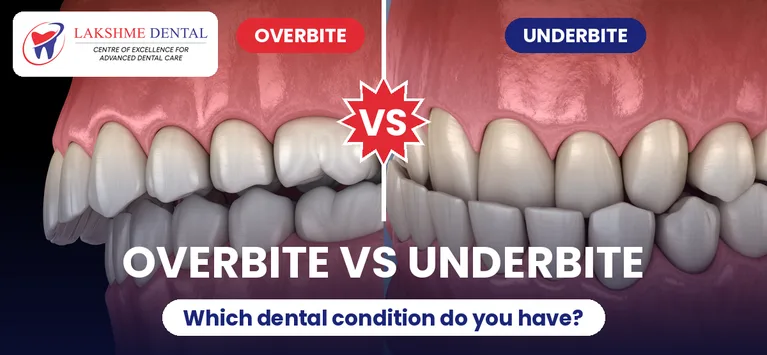
With an overbite, the upper front teeth come down over the lower front teeth. A small amount of overlap is normal. It becomes more noticeable when the upper teeth cover a large portion of the lower ones.
An underbite is different. Here, the lower front teeth are positioned ahead of the upper front teeth when you close your mouth.
In simple terms:
- Overbite: the upper front teeth overlap the lower ones.
- Underbite: the lower front teeth come in front of the upper ones.
It is possible to have other alignment differences at the same time, so this simple comparison cannot tell you exactly how severe a person’s bite problem is.
What Might an Overbite Feel or Look Like?
Some overbites are easy to notice when smiling or closing the mouth. In a deeper overbite, the lower teeth may come into contact with the tissue behind the upper teeth.
You might also notice that certain teeth are wearing down more than others or that biting into food does not feel quite right.
An overbite can develop for different reasons. The natural shape of the jaws and teeth is one factor. Childhood habits can sometimes influence how the teeth develop as well.
Possible contributors include:
- Family dental or jaw characteristics
- Long-term thumb sucking
- Extended pacifier use
- Tongue thrusting
- Nail biting
- Teeth grinding or clenching
- Changes following the loss of back teeth
There is no single cause that applies to everyone with an overbite.
What About an Underbite?
An underbite can be more noticeable because the lower front teeth sit ahead of the upper teeth. In some people, the difference is mainly related to tooth position. In others, the relationship between the upper and lower jaws is a major factor.
You may notice an underbite when you bite down, smile or look at your profile.
Genetics can influence jaw shape and growth, which is why underbites sometimes run in families. Other factors can also be involved, including differences in jaw development, certain childhood habits, previous jaw injuries and conditions affecting facial development.
Because the jaws may be involved, an underbite should not be judged by the position of the front teeth alone.
Does Having an Overbite or Underbite Mean You Need Treatment?
Not necessarily.
This is one of the most important things to understand about bite differences. The presence of an overbite or underbite does not automatically mean that treatment is required.
A dentist or orthodontist will consider how your teeth function as well as how they look.
For example, a mild bite difference may not interfere with eating, speaking or cleaning your teeth. If there is significant tooth wear, repeated irritation, difficulty chewing or discomfort, however, a closer assessment may be appropriate.
A pronounced bite problem can sometimes contribute to:
- Uneven wear on teeth
- Difficulty biting certain foods
- Irritation of the gums or tissues
- Excess pressure on particular teeth
- Problems cleaning difficult-to-reach areas
- Jaw discomfort
- Speech difficulties in some cases
These effects are not inevitable. They depend on the individual’s bite and overall oral health.
What Treatment Can Help?
There isn’t one treatment that suits every overbite or underbite. The appropriate option depends on the person’s age, tooth position, jaw relationship and the extent of the problem.
Braces can move teeth gradually and are commonly used for different types of bite correction. In some cases, orthodontic elastics or other appliances are used alongside them.
Clear aligners may be suitable when the required correction mainly involves tooth movement. They are not appropriate for every bite pattern, so an assessment should come before choosing this option.
For growing children, certain orthodontic appliances may be used to guide dental or jaw development when appropriate. Timing can be important because treatment options can differ while the jaws are still growing.
In a small number of adults with a significant jaw discrepancy, orthognathic surgery may be considered together with orthodontic treatment. This is generally reserved for cases where the underlying jaw relationship cannot be adequately corrected by moving the teeth alone.
When Is It Worth Getting Your Bite Checked?
You don’t have to wait until your teeth start hurting before asking about your bite.
Consider scheduling an evaluation if:
- Your upper teeth cover a large part of your lower teeth.
- Your lower front teeth sit noticeably ahead of your upper teeth.
- You regularly struggle to bite or chew certain foods.
- You notice unusual wear or damage to your teeth.
- Your gums or mouth tissues are repeatedly irritated.
- Your jaw feels uncomfortable when you eat or close your mouth.
- You are concerned about your child’s developing bite.
For children, an early assessment can be useful because their teeth and jaws are still changing. Adults can also have bite concerns assessed and treated, even after jaw growth has finished.
Final Thoughts
Overbite and underbite are not the same thing. An overbite means the upper front teeth overlap the lower teeth more than expected, while an underbite places the lower front teeth ahead of the upper ones.
A small difference may not cause any trouble, while a more pronounced bite can affect how the teeth meet and function. If you’re unsure about your own bite, a dental examination is the simplest way to understand what is happening and whether anything actually needs to be done.
Frequently Asked Questions
An overbite occurs when the upper front teeth overlap the lower teeth more than expected. An underbite occurs when the lower front teeth sit in front of the upper teeth.
A mild overbite or underbite may not cause any problems. More noticeable bite differences can sometimes affect chewing, tooth wear, or the tissues around the teeth.
Several factors can contribute, including genetics, jaw development, tooth position, childhood oral habits, and previous dental or jaw changes.
Yes. Depending on the cause and severity, treatment may include braces, clear aligners, orthodontic appliances, or, in certain severe jaw-related cases, orthognathic surgery.
An early assessment can be useful because a child's teeth and jaws are still developing. An orthodontic evaluation can identify bite differences and determine whether treatment may be appropriate.