How Long Does a Root Canal Take? Treatment Time Explained

If your dentist has recommended a root canal, you might be wondering how much time you need to set aside for the appointment. Will it take an hour? Is a single appointment enough to finish the treatment? Or will you need to return for another session?
A root canal usually takes around 60 to 90 minutes, although simpler cases may take less time and complicated teeth can require two hours or longer. The exact duration depends on which tooth needs treatment, the extent of infection and the condition of its root canals.
Understanding the treatment timeline can help you plan your dental visit with fewer uncertainties.
How Long Does a Root Canal Take for Different Teeth?
Not every tooth takes the same amount of time to treat. Front teeth usually have fewer canals, while back teeth have more complicated internal structures that need careful cleaning.
Here’s an approximate breakdown:
Tooth Type | Estimated Treatment Time |
| Front teeth (incisors and canines) | 45–60 minutes |
| Premolars | 60–90 minutes |
| Molars (back teeth) | 90–120 minutes or longer |
These timings are estimates for a treatment session, not guaranteed appointment lengths.
Front Teeth
Since most front teeth contain only one canal, dentists can often treat them in less time than back teeth. In uncomplicated cases, the dentist may finish the procedure within an hour.
Premolars
Premolars sit between your front and back teeth. They may contain one or more canals, so treatment often takes slightly longer than it does for front teeth.
Molars
Molars are usually the most time-consuming because they can contain several canals. Their position at the back of the mouth can also make access difficult. Some molar treatments may require more than one appointment.
How Is Root Canal Treatment Performed?
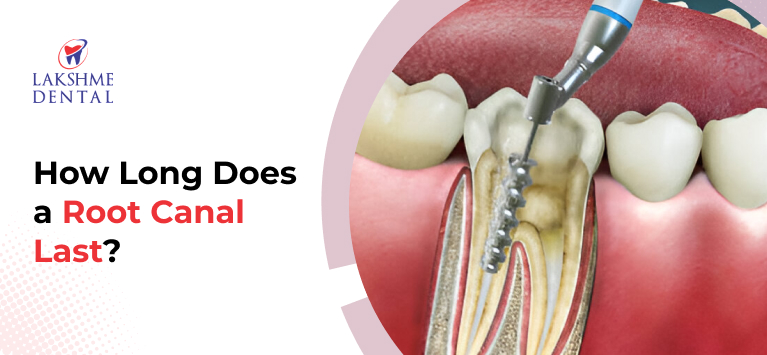
A root canal is performed when the soft tissue inside a tooth, called the pulp, becomes inflamed or infected. Instead of removing the entire tooth, the dentist treats the affected area to help preserve your natural tooth.
The procedure generally involves the following steps:
1. Examination and X-ray
Your dentist examines the affected tooth and may take an X-ray to check its roots and surrounding structures.
2. Numbing the tooth
Local anaesthesia is administered to reduce discomfort during treatment.
3. Removing the infected pulp
A small opening is made in the tooth to reach and remove the damaged tissue inside.
4. Cleaning and sealing
The canals are carefully cleaned, disinfected and shaped before being filled with a suitable dental material.
5. Restoring the tooth
A temporary or permanent filling is placed. Depending on the tooth’s condition, your dentist may recommend a crown for additional protection.
Why Does Treatment Time Vary Between Patients?
Two patients undergoing root canal treatment may spend different amounts of time in the dental chair. Several factors can influence the duration.
Severity of the Infection
When an infection has spread deeper into the tooth or surrounding tissues, additional cleaning or medication may be necessary. In such cases, the canals may need further attention at a follow-up visit before the final filling is placed.
Shape and Number of Root Canals
Some teeth have unusually narrow, curved or hardened canals. These can be difficult to reach and may require extra time to clean properly.
Previous Root Canal Treatment
If a tooth needs treatment again, the dentist may first have to remove existing filling material and investigate the reason for the previous treatment’s failure.
Condition of the Tooth
A badly damaged or cracked tooth may need additional assessment and restoration. This can affect the overall treatment schedule.
Can a Root Canal Be Completed in One Sitting?
Yes, many root canals can be completed in a single appointment, particularly when the tooth has a simple canal structure and the dentist can clean and seal it adequately.
However, some root canal treatments require two or more visits.
For example, if an infection needs further management, your dentist may place medication inside the tooth and cover it with a temporary filling. The canals can then be reassessed and sealed at a later appointment.
An additional session is sometimes part of the planned treatment rather than a sign of complications.
Is Root Canal Treatment Painful?
Many people worry more about discomfort than the actual treatment time.
With local anaesthesia, you should not feel sharp pain while the dentist works. You may notice some pressure or vibration, but tell your dentist if anything feels painful.
Once the numbness wears off, mild tenderness around the treated tooth is common. The tenderness should gradually settle as the surrounding tissues recover.
When Can You Expect to Feel Normal Again?
Most people can resume their usual routine fairly quickly, although the treated tooth may remain sensitive for a few days. Recovery generally takes less than a week.
To protect your tooth during this period:
- Avoid chewing until the numbness has completely worn off.
- Stick to meals that require minimal chewing until the discomfort settles.
- Keep pressure off the treated tooth while it has a temporary filling.
- Maintain your daily oral hygiene routine without putting unnecessary pressure on the sensitive area.
- Return for the permanent filling or crown at the time recommended by your dentist.
Is a Dental Crown Necessary for Every Root Canal?
A root canal removes the damaged tissue inside the tooth, but the tooth still needs a suitable restoration to remain functional.
Back teeth often benefit from a dental crown because they experience greater pressure while chewing. However, not every root canal-treated tooth needs one.
Your dentist will decide whether a filling or crown is appropriate based on the amount of healthy tooth structure remaining.
Remember that the time needed for a crown or final restoration is separate from the root canal procedure itself.
Final Thoughts
So, how long does a root canal take? For many patients, the procedure takes approximately 60 to 90 minutes, but the appointment may be shorter or longer depending on the tooth.
At Lakshme Dental in Tirunelveli, patients can have their tooth examined and discuss the treatment options suitable for their condition. If you’re experiencing persistent toothache, sensitivity or swelling, scheduling a dental assessment can help identify the cause and determine whether root canal treatment is needed.
Frequently Asked Questions
A molar root canal usually takes around 90 to 120 minutes or longer because back teeth have multiple canals. Some cases may require additional appointments.
Yes, many root canal treatments can be finished in a single visit. However, teeth with complicated canal structures or significant infections may need additional sessions.
Treating a front tooth generally takes around 45 to 60 minutes. Since these teeth usually have fewer canals, the procedure is often quicker than treatment for molars.
You can usually eat once the numbness has completely worn off. Choose soft foods initially and avoid chewing directly on the treated tooth until your dentist advises otherwise.
Mild soreness may continue for a few days following treatment. It should gradually decrease, but persistent or worsening pain needs a dental evaluation.
Not every tooth requires a crown. Back teeth are more likely to need one because they handle greater chewing pressure. Your dentist will recommend a suitable restoration based on the tooth's condition.