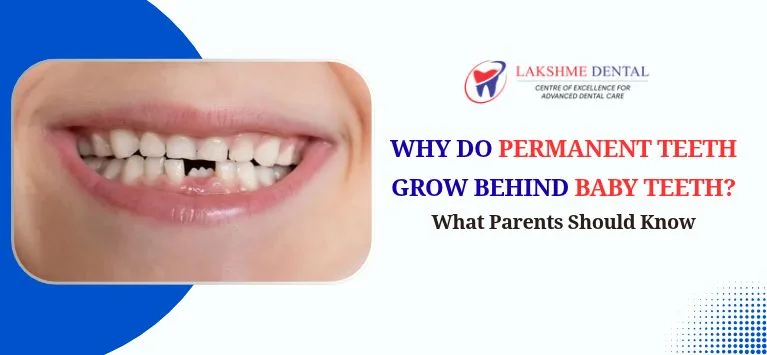
Why Do Permanent Teeth Grow Behind Baby Teeth? What Parents Should Know

Have you noticed a new tooth appearing behind your child’s baby tooth, almost as if they have two rows of teeth? It can be surprising to see, especially when the original tooth is still firmly in place. If your children’s teeth grow behind their baby teeth, you may wonder whether something is wrong or if the tooth needs to be removed.
This appearance is commonly called “shark teeth” and can happen during the normal transition from baby teeth to permanent teeth. In many children, the baby tooth eventually loosens and falls out on its own. However, the timing and position of teeth can vary, so knowing what to watch for can help you decide when to seek dental advice.
Why Do Permanent Teeth Grow Behind Baby Teeth?
Normally, when a permanent tooth begins developing, the roots of the baby tooth gradually dissolve. This makes the baby tooth loose, allowing it to fall out and create space for the new tooth.
Sometimes, this process does not happen quickly enough. The permanent tooth may begin erupting before the baby tooth is ready to fall out, causing it to appear behind the existing tooth.
There are several reasons this may happen:
1. Baby Tooth Roots Have Not Dissolved Completely
The roots of baby teeth need to gradually break down before the teeth become loose. If this process is delayed or the permanent tooth does not push against the roots properly, the baby tooth may remain firmly in place.
2. Limited Space in the Jaw
Permanent teeth are larger than baby teeth. If there is not enough space in the jaw for the incoming tooth, it may emerge at a different angle or behind the baby tooth instead of directly in its expected position.
3. Different Tooth Eruption Timing
Children do not lose their baby teeth according to exactly the same schedule. Sometimes, a permanent tooth starts coming in while the baby tooth is still present simply because their development is happening at different speeds.
4. Family Tendency and Oral Habits
Family history of crowded teeth may influence how teeth develop. Certain oral habits, including thumb sucking and mouth breathing, may also affect tooth positioning and jaw growth.
At What Age Do Children Get Shark Teeth?
This usually happens during the years when children begin replacing their baby teeth with permanent teeth.
Parents commonly notice permanent teeth growing behind the lower front baby teeth around the ages of 5 to 7, particularly when the lower permanent incisors begin to erupt. Similar situations can occur in other areas of the mouth as children grow and replace more baby teeth.
The appearance may look unusual, but it does not automatically mean your child’s teeth will remain crooked.
What Should You Do When a Permanent Tooth Appears Behind a Baby Tooth?
Seeing two rows of teeth does not mean you need to rush into pulling the baby tooth out. Start by checking whether the baby tooth is loose.
- If the baby tooth is loose: Encourage your child to gently wiggle it with their tongue or clean fingers. Allow it to fall out naturally rather than forcing it.
- If the baby tooth is still firm: Do not try to pull it out at home. Arrange a dental check-up to understand why it is not loosening.
- Keep both teeth clean: Brush twice daily with fluoride toothpaste, paying extra attention to the narrow space between the baby tooth and the permanent tooth.
- Watch for changes: Notice whether the baby tooth becomes looser, whether the new tooth continues erupting, or whether your child develops discomfort.
Food and plaque can collect more easily when two teeth sit close together, so cleaning these areas carefully is important.
Will the Permanent Tooth Move Forward on Its Own?
In many cases, yes. After the baby tooth falls out, the tongue and surrounding teeth may help guide the permanent tooth forward towards its natural position. As the new tooth continues developing, its position may gradually improve.
However, this does not happen the same way for every child. The amount of available space, the angle of eruption and the position of the teeth can influence how they align. Some children may only need monitoring, while others may require further dental or orthodontic assessment.
When Should You Take Your Child to a Dentist?
Although shark teeth are relatively common, it is important not to assume every case will resolve naturally. A dentist can examine the baby tooth, check the permanent tooth’s position and determine whether it needs attention.
Schedule a dental visit if:
- The baby tooth remains firmly attached even after the permanent tooth has appeared.
- Two rows of teeth remain for an extended period.
- Your child experiences pain, tenderness or discomfort.
- The gums become red, swollen or bleed.
- The permanent tooth appears significantly out of position.
- Your child has difficulty brushing or cleaning around the teeth.
Depending on the examination, the dentist may recommend monitoring the tooth or taking dental X-rays to understand its position and development. If the baby tooth is not loosening naturally, extraction may sometimes be considered to help the permanent tooth move into a better position.
Helping Your Child Through This Stage of Dental Development
When children’s teeth grow behind their baby teeth, it can look worrying at first, but it is often a manageable part of growing up. The baby tooth may loosen naturally as the permanent tooth continues to emerge.
Avoid forcing a tooth out, keep both rows clean and watch how the teeth develop. If the baby tooth remains firm, your child experiences discomfort, or the new tooth appears unusually positioned, a dental evaluation can help you understand the next step.
Concerned about your child’s growing teeth? A dental check-up can help you understand whether the tooth needs monitoring or treatment. Give your child the support they need for a healthy transition to their permanent smile.
Frequently Asked Questions
Yes, it is a relatively common occurrence, particularly around the lower front teeth. The permanent tooth may begin erupting before the baby tooth falls out. A dentist can check whether the baby tooth is likely to loosen naturally.
No. Avoid pulling out a baby tooth that is still firmly attached. If it is loose, allow it to come out naturally without applying unnecessary force. If it remains firm, consult a dentist.
It may gradually move forward as the baby tooth falls out, with the tongue and natural tooth development helping its position change. However, alignment depends on available space and the way the tooth erupts, so not every tooth will move into the correct position without further attention.

