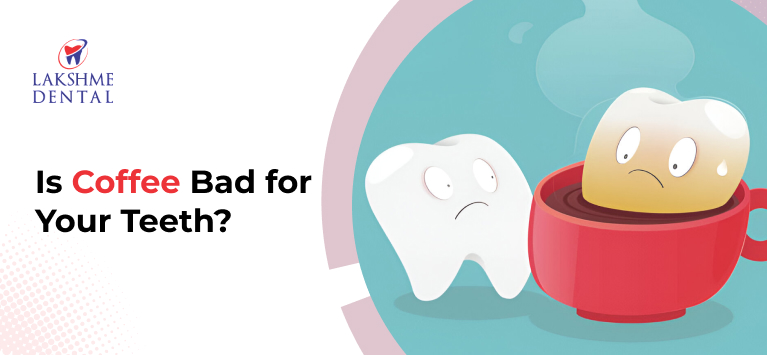
Is Coffee Bad for Your Teeth?

Key Facts
- Coffee’s acidic nature makes it a culprit for tooth staining and enamel wear.
- Black coffee stains more, but sugar-filled coffee damages teeth faster.
- Caffeine can dry out your mouth, increasing cavity risk.
- Gum health may worsen with poor oral hygiene and too much acidic coffee.
- Daily coffee is okay. Balance it with proper dental care.
Coffee has become a go-to beverage and morning tradition for people everywhere.
Whether it’s a morning kick start or a comforting afternoon habit, many can’t imagine life without it.
But have you ever paused and wondered—is coffee bad for your teeth?
If you drink coffee regularly and have noticed stains, sensitivity, or gum issues, you’re definitely not alone.
Let’s see how coffee affects your teeth and gums, which types of coffee are more harmful, and how to protect your oral health without giving up your favorite drink.
Let’s break it down in simple terms.
Should you worry about coffee and your teeth?
Coffee is acidic and dark-colored, which raises a few red flags when it comes to oral health. Many people who visit my clinic have these bunch of questions:
- Is black coffee bad for teeth?
- Does coffee harm your gums?
- Is caffeine itself the problem?
- What happens if I drink coffee every day?
The good news is, you don’t have to quit coffee completely. But understanding the effects can help you make smarter choices.
Does coffee stain your teeth?
Yes, coffee can stain your teeth over time. This happens because coffee contains tannins. They are compounds that make pigments cling to your teeth.
These stains don’t appear overnight, but with daily intake, you may notice your teeth turning yellow or brownish.
A study published in the Journal of Dentistry found that coffee drinkers had significantly more dental staining than non-coffee drinkers.
But these stains are mostly cosmetic and can be removed with professional cleaning or whitening.
Is coffee acidic?
Coffee has an acidic nature, with a pH close to 5. Anything below 7 is considered acidic and can slowly weaken your enamel, the protective outer layer of your teeth.
Weakened enamel can lead to:
- Tooth sensitivity
- Cavities
- A rough tooth surface that makes it easier for stains to stick.
If you sip coffee multiple times a day without rinsing or brushing, your enamel may suffer more over time.
Tip: Rinse your mouth with plain water after drinking coffee to reduce acid contact.
Is black coffee worse for your teeth?
Yes and no. Here’s why!
Pros of black coffee:
- It doesn’t contain sugar (so lower cavity risk)
- Lower in calories
Cons of black coffee:
- It causes more staining because of its dark color and tannin content.
- It’s more acidic without milk to buffer it
So, while black coffee may not cause decay directly, it can discolor your teeth faster than milk coffee.
Is caffeine itself bad for your teeth?
Caffeine in coffee isn’t directly harmful to teeth, but it reduces saliva flow, which leads to dry mouth.
Why does this matter?
Saliva is your mouth’s natural defense. It washes away food particles and bacteria. Lack of saliva makes your teeth more vulnerable to decay and plaque.
If you drink several cups of coffee daily, make sure you drink enough water to stay hydrated and maintain saliva flow.
Is chewing coffee beans bad for your teeth?
Yes. Chewing hard roasted coffee beans can chip enamel or damage dental work like fillings and crowns. It’s similar to chewing ice or hard candy.
Chewing on coffee beans is done by people who work out and need a coffee snack with low calories. Also, some coffee beans are coated in sugar or chocolate, which increases cavity risk.
Occasional chewing might be fine, but don’t make it a habit.
Is coffee bad for gums?
Coffee’s acidity and dryness can irritate gums over time, especially if you already have gum issues like gingivitis or periodontal disease.
Here’s what coffee can do:
- Worsen gum sensitivity
- Contribute to plaque formation if sugar is added
- Delay healing if you already have gum problems
That said, some research suggests that coffee’s antioxidants may help reduce inflammation. But this effect is small and not enough to rely on for gum health.
Is drinking coffee every day bad for your teeth?
Drinking coffee daily is not necessarily bad, if you follow healthy habits:
- Don’t add too much sugar or syrup
- Rinse with water after drinking
- Brush your teeth regularly
- Avoid sipping slowly throughout the day
If you sip on coffee from morning till evening, your teeth are constantly exposed to acid, which can be more damaging than one or two quick cups.
Tips to enjoy coffee without harming your teeth
You don’t have to give up your favorite drink. Just follow these simple tips:
- Drink water after coffee. It helps wash away acid and stains.
- Using a straw reduces contact with front teeth.
- Avoid sugary creamers and syrups. Sugar increases decay risk.
- Wait at least 30 minutes to brush, as brushing immediately can wear down softened enamel.
- Get regular dental cleanings. It helps remove deep stains and plaque.
When to see a dentist?
If you notice any of the following, it’s time to consult your dentist:
- Stubborn tooth discoloration in shades of yellow or brown
- Sensitivity to hot or cold drinks
- Bleeding or swollen gums
- Bad breath despite brushing
A dentist can guide you on stain removal, enamel care, and tips to enjoy coffee safely.
Final Thoughts
You can still enjoy your morning coffee without sacrificing your bright smile. Just be smart about how you drink coffee and how you care for your teeth.
Want help managing coffee stains or tooth sensitivity?
Book a free consultation with us or a dental expert near you and keep your smile healthy for years to come.
Frequently Asked Questions
Not if you maintain good oral hygiene and avoid sugar. It’s the habits around coffee that matter.
Yes, black coffee stains more, but it's usually better for avoiding cavities if no sugar is added.
It can irritate gums or worsen existing issues but doesn’t directly cause gum disease.
Yes, especially when it’s sweetened or sipped slowly over time.
Regular brushing, whitening toothpaste, and professional cleanings can help.